
Share :



Share :
The Class 7 license (or Class 7L) in Alberta is the first of many steps to get your full Alberta driver's license. All drivers in Alberta start with a Class 7 before moving up to a Class 5 Alberta License. This graduated system is designed to help new drivers gradually build their knowledge and confidence on the road.
This blog post outlines all the information you need about getting your Class 7 license, restrictions, tips for helping you study and pass the test, and how car insurance in Canada works in the province.
The Alberta Class 7 driver's license is a learner's license that allows you to operate Class 5 vehicles such as cars, SUVs, pickup trucks and other regular vehicles under the supervision of a fully licensed driver. You can also operate a moped by yourself.
The first step toward getting your Class 7 license is to get a copy of the Alberta Drivers Handbook. All questions in your knowledge test are taken directly from the handbook, so make sure you read it a few times. You can download a copy of it on the Alberta Transportation website.
You must also meet the following requirements :
Next, you will take a knowledge test. You will have to pay a fee of around $20 (it will depend on which registry you go to). Don't forget your form of accepted ID.
The third, and final step, is to purchase your license card. If you successfully pass the knowledge and vision tests, you can purchase the Class 7L license card. You may receive a temporary 30-day license until the official card comes in the mail. Once it arrives, you can destroy the temporary one.
No matter what Class license you have in Alberta, you should strive to stay current on any restrictions. As a Class 7 L, you are subject to a series of driving restrictions. Here are the main five you must follow at all times :
Violating the above driving restrictions will result in fines, suspensions, and demerit points in Alberta. Here is a closer look :
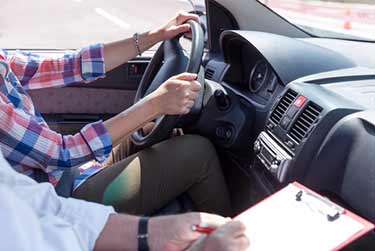
If you're feeling overwhelmed about your Class 7 L test, we've put together some tips to help you prepare for the test. When the big day comes, you'll be ready to pass.
Once you feel confident, it's time to visit your local testing centre.
The Class 7 knowledge test is designed to test basic knowledge of road rules, traffic signs, and safe driving. Here is what you need to know about taking the test :
To write the test you will need to show proof of citizenship, proof of residency in Alberta, and pass a vision test.
When you pass the test you will be issued a Class 7 learner's license. The cost for a 5-year term is around $65.
In order to take the next step in the GDL license system in Alberta, you must :
You can learn all about the Alberta Class 5 License.
In Alberta, you can get the Class 7 learner's license when you are 14 years of age. The youngest you can upgrade to a Class 5 GDL is 16.
You must hold the Class 7 license for a minimum of 12 months. You can renew the Class 7 license as many times as you want. It is recommended that you log at least 60 of driving before taking the basic road test.
All supervisory drivers must be at least 18 and have a full Class 5 non-probationary license. They must be seated in the passenger seat of the vehicle at all times.
You are required to pay a fee of $17-$20 to take the knowledge test. You will have to pay an additional fee for your learner's license.
You can buy a vehicle with a Class 7 license as long as you are over 18 or have consent from a parent.
Are you looking for insurance as a newly licensed driver in Alberta? Newly licensed drivers are considered a greater risk than experienced drivers. Most Class 7 drivers will have difficulty finding an insurer, and often, premiums will be higher. Your best option is to be added as an occasional driver on your parent's or other driver's policy. Completion of the government-approved defensive driving course will qualify you for a discount to save on car insurance in Alberta.
Share

Digital Content Writer
Kayla-Jane has been a content writer with ThinkInsure since 2020. She creates insurance content for auto, home, and commercial. Kayla-Jane has a diploma in Journalism.
Read our insurance blog to get helpful tips, information and news.

Learn how car insurance deductibles work in Ontario. Discover how choosing a $500 vs. $1000 deductible impacts your auto insurance premiums and claim payouts.

The Statutory Accident Benefits Schedule in Ontario ensures certain benefits are available to any person injured in a car accident. In this blog, we’ll discuss what the statutory accident benefits schedule is and the role it plays in insurance and accident benefits claims.

Accumulated a few demerit points on your driving record? Here are some of the most common questions about demerit points in Ontario, how the demerit points system works, and if they can impact insurance.

There are situations where you will want or be required to have additional insurance, often in the form of optional enhancements called the Ontario Policy Change Form (OPCF).
