Jamie MacDonald
2026-05-07 14:59:32
★★★★★
Dylan Smith was a fantastic rep! Enjoyed our conversations and he was incredibly helpful and quick to get my policy replaced with a new one. Thank you.
Car insurance is one of the larger fixed costs Canadian drivers carry, and what you pay depends heavily on where you live. The single most effective thing any driver can do is compare before renewing, because the same driver and vehicle can be priced very differently from one company to the next.
The national average annual premium is about $1,321 , but that figure hides a wide range between provinces. Ontario is the most expensive at $2,146 per year (FSRAO); Quebec is the most affordable at $1,006. ThinkInsure advisors compare and place auto insurance in Ontario and Alberta.

National and provincial averages are sourced from FSRAO, AIRB, IBC, and Statistics Canada. See our methodology.
national average premium
Ontario, highest in Canada
Quebec, lowest in Canada
average ThinkInsure savings
Car insurance is a legal contract between you and an insurance company: you pay a premium, and in return the insurer covers financial losses from accidents, theft, vandalism, and other vehicle-related events. It is mandatory in every Canadian province and territory, and you cannot legally drive without it.
Every policy is built from mandatory coverage required by law in your province, plus optional coverage such as collision, comprehensive, and endorsements. The required minimums, and the cost of meeting them, vary significantly by province.
The average annual cost of car insurance in Canada is about $1,321 per year , roughly $110 per month. That national figure masks dramatic differences between provinces. Ontario is the most expensive; Quebec is the most affordable. Where you live is one of the single biggest factors in what you pay.
The type of insurance system in your province, population density, claims history, and local fraud rates all feed into your premium. ThinkInsure compares and places auto insurance in Ontario and Alberta; if you are in one of those provinces, the most reliable way to know you have the best rate is to compare.
| Province / Territory | Annual premium | vs. Canada average |
|---|---|---|
| Canada (national avg.) | $1,321 | — |
| Ontario | $2,146 | +62.5% |
| Alberta | $1,703 | +28.9% |
| British Columbia | $1,832 | +38.7% |
| Newfoundland | $1,369 | +3.6% |
| Nova Scotia | $1,310 | -0.8% |
| Manitoba | $1,212 | -8.3% |
| New Brunswick | $1,203 | -8.9% |
| Saskatchewan | $1,146 | -13.2% |
| Prince Edward Island | $1,016 | -23.1% |
| Quebec | $1,006 | -23.8% |
As you can see in the chart above, premiums in Ontario, British Columbia, and Alberta are considerably more expensive than the national average. Newfoundland, Nova Scotia and the Northwest Territories are close to the national average, and Yukon, PEI, and Quebec are significantly more affordable.
Where you live can directly impact your annual car insurance rates – to the tune of hundreds of dollars difference.
Quebec has the least expensive auto insurance. Residents only pay about $1,006 per year on average.
Car insurance in Ontario is the most expensive. Residents pay an average of $2,146 annually, over $1,000 more than in Quebec.
Why such a big disparity? Some of it concerns the insurance system and rules in each province. For example, in Quebec, drivers only pay for insurance, and the government covers accident benefits. Mandatory coverage also has lower limits.
Drivers in other provinces, like BC, Alberta, and Ontario, have higher minimum coverage requirements. They also have to pay for accident benefits, increasing overall insurance costs.
There are five important things to consider that affect the average rates for each province:
Canada uses three different models for delivering auto insurance. The system in your province determines who you buy from, how you shop, and how claims are handled.
In private-market provinces, coverage is sold by competing insurance companies. You can shop around, compare quotes, and switch providers. Working with an advisor gives you access to multiple companies at once. ThinkInsure operates in two of these provinces, Ontario and Alberta.
Public provinces operate government-run programs: ICBC in BC, MPI in Manitoba, and SGI in Saskatchewan. Basic mandatory coverage is purchased through the Crown corporation at a standardized rate.
Quebec splits the model: the SAAQ covers bodily injury on a no-fault basis, while private insurers handle property damage and liability. This keeps overall premiums low while maintaining private-market competition for property coverage.
Get personalized auto insurance coverage tailored to your budget and driving needs. We'll shop and compare our large partner network to find you the lowest rates. Get started with free quote today.
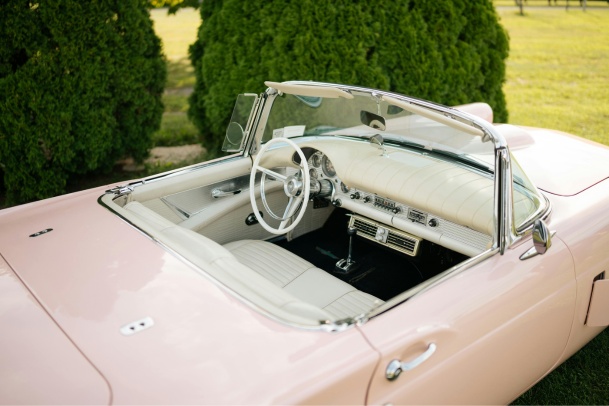
Get startedBeyond a standard personal auto policy, Canadian drivers can get coverage tailored to their situation: high risk auto insurance for drivers with tickets or claims, classic car insurance for collector vehicles, usage-based insurance that prices on how you drive, rideshare insurance for Uber and Lyft drivers, and commercial auto for business vehicles.
To buy car insurance in Canada you need a valid driver's licence, a vehicle registered in your name (or that you have permission to insure), and to provide accurate information about your driving history. Insurers will review your licence class, years licensed, claims history, and any tickets or convictions.
In private-market provinces you can buy car insurance three ways:
Most drivers qualify for standard insurance. Drivers with a poor record, a lapse in coverage, or multiple claims may fall into the non-standard (high risk) category and pay more. If that is you, see our page on high risk auto insurance in Ontario.
Car insurance is regulated at the federal and provincial levels in Canada. There are several governing bodies and acts that divide responsibilities:
At the provincial level, each region has a Superintendent of Insurance who regulates consumer products. The superintendent also oversees insurers' and brokers' claims, underwriting, and business practices.
For example, the Financial Services Regulatory Authority of Ontario (FSRAO) regulates Ontario, and the Alberta Automobile Insurance Rate Board (AIRB) oversees Alberta.
Enter your postal code, vehicle, and driving information.
Instantly compare rates from multiple insurers.
Choose the best rate and confirm your policy details with us.
Get started with a free quote today!
All provinces require you to have at least $200,000 in third-party liability coverage (except for Nova Scotia and Quebec) and accident benefits. Some require direct compensation property damage, while others do not. Only Alberta does not require uninsured automobile protection.
The table below illustrates basic auto insurance requirements across the country:
| Province or Territory | Public or Private | No-fault Insurance | Minimum Liability Coverage | Required Coverage | Minimum Driving Age |
|---|---|---|---|---|---|
| Ontario | Private | Yes | $200,000 | Accident benefits, Uninsured automobile | 16 |
| Alberta | Private | No | $200,000 | Accident benefits | 14 |
| British Columbia | Public | No | $200,000 | Accident benefits, Uninsured automobile | 16 |
| Manitoba | Public | No | $500,000 | All perils, Personal injury, Hit and run, Inverse liability | 16 |
| New Brunswick | Private | Yes | $200,000 | Accident benefits, Direct property compensation damage, Uninsured automobile | 14 |
| Newfoundland and Labrador | Private | No | $200,000 | Uninsured automobile | 16 |
| Northwest Territories | Private | No | $200,000 | Property damage, Personal injury | 17 |
| Nova Scotia | Private | Yes | $500,000 | Accident benefits, Direct property compensation damage, Uninsured automobile | 16 |
| Nunavut | Private | No | $200,000 | Property damage, Personal injury | 15 |
| Prince Edward Island | Private | Yes | $200,000 | Accident benefits, Uninsured automobile | 16 |
| Quebec | Public and Private | Yes | $50,000 | Accident benefits, Property damage | 16 |
| Saskatchewan | Public | No | $200,000 | Property damage, Personal injury | 16 |
| Yukon Territories | Private | No | $200,000 | Property damage, Personal injury | 15 |
Yes, each province has a different system and mandatory coverages, so car insurance rates would be vastly different between each one. British Columbia, Saskatchewan, and Manitoba have government provided programs, whereas Alberta, Ontario, the Atlantic provinces, and the Territories have private car insurance markets. Quebec has a hybrid system - the government provides personal injury insurance, while private insurers cover the property damage. These differences will affect how much drivers pay for coverage in each region.
Drivers can significantly benefit from understanding their policy options. You can personalize your coverage in countless ways to meet your unique driving needs. You can increase policy limits, change your coverage type, and add endorsements for specific coverage. If you are unsure about your coverage needs, speak with a ThinkInsure advisor today.
Mandatory requirements vary by province. There are four main types of coverage required. All provinces require third-party liability, but the limit differs.
For example, Nova Scotia and Manitoba require $500,000, whereas Quebec only requires $50,000, with the rest of the country requiring $200,000. Accident benefits can be different depending on where you live.
Here are the most common types of mandatory insurance:
Third-party liability insurance is mandatory nationwide and is the basis for all plans. It covers expenses for damage caused to another vehicle, property, or person in a crash. It compensates for medical bills, legal fees, and other related costs.
This protection comes into play when you are the at-fault party. Here are some examples:
Accident benefits coverage is required everywhere in Canada. It provides financial assistance if you are injured in an automobile accident. It doesn’t matter who is at fault. It helps to supplement medical expenses not covered under your provincial health care plan.
This includes rehabilitation, attendant care, and even income replacement. Some provinces allow you to sue for pain and suffering. Max limits apply.
Direct property compensation damage (DCPD) is available in several provinces. It covers damage to your automobile, its contents, and loss of use where another driver is at fault.
If, for example, another driver rear-ends you at a stop sign, your provider will ensure your vehicle is repaired.
It is only applicable in provinces where DCPD is mandated. This includes Quebec, Nova Scotia, New Brunswick, and Prince Edward Island. You cannot increase the limits for this protection. You can enhance your plan with collision insurance.
As of January 1, 2024, DCPD will be optional in Ontario. Drivers can opt out of this overage using OPCF 49. Speak with your advisor about whether this option is right for you.
With uninsured motorist coverage, you are protected against uninsured or unidentified drivers. It is mandatory everywhere except for Alberta. It provides insurance in the event you are injured or killed by an uninsured motorist. You also have coverage if you’re the victim of a hit-and-run.
Most Canadian drivers have more than the minimum required amount of insurance. They do this by upping the limits on mandatory coverage and adding optional coverages. Here are the most common types of optional insurance:
You will have protection if your vehicle is damaged in an accident. It covers you if you are in an accident with another vehicle or a stationary object. For example, you hit a parked car, mailbox, or tree. It is optional but well worth adding to your plan.
Without this, you are on the hook for the repair bills if you are in an at-fault accident. Adding it is simple. You choose a deductible amount. The higher you set it, the less you will pay for collision coverage.
A crash is not the only way your vehicle could be damaged. This is where optional comprehensive insurance comes into play. You are covered against damage or loss because of non-driving events. This includes damage from falling trees, weather, theft, vandalism, etc.
Adding this will give you peace of mind, knowing you are covered even when you are not behind the wheel. Like collision, you will choose your deductible amount. It typically costs a few hundred dollars per year to add this protection.
Get extra protection by adding coverage for specific types of risks. You can buy insurance for specified perils such as theft, fire, hail, wind, lightning, flooding, and more. They must be listed in your plan for you to have protection.
All perils is a combination of collision and comprehensive coverage. You will have protection from all risks unless they are otherwise explicitly excluded from your policy.'
No one wants their vehicle to break down, but it can happen. Emergency roadside assistance helps if your vehicle breaks down or has mechanical issues. It aids with getting your car back on the road. This includes boosting the battery, tire changes, locksmith services, towing, and more. Knowing that help is only a call away gives you peace of mind.
Policyholders can add endorsements (or riders) to expand and customize policies. The name of endorsements varies by province. For example, with Ontario car insurance, they are Ontario Policy Change Forms (OPCF). With car insurance in Alberta and the Atlantic regions, they are called Standard Endorsement Forms (SEF). In Quebec, they are called Quebec Endorsement Forms. However, the endorsement number remains the same across the board.
Here are some of the most widely used policy riders:
Every insurer uses its own formula to calculate risk and set premiums. While the exact weighting varies, the following factors apply across all Canadian provinces.
Want the detailed breakdown of how each factor is weighted and what you specifically will pay? Check out our car insurance quotes page to learn how insurers determine how much your coverage will cost.
ThinkInsure is licensed to place auto insurance in Ontario and Alberta. Start here if you are in either province:
Province guides for the rest of Canada are informational; rates and rules vary by region:
Over 50 years helping Canadians find the right car insurance.
RIBO & AIC licensed advisors, serving drivers in Ontario and Alberta.
Compare coverage and rates from Canada's top providers.
Exceptional customer service, with a 4.7/5 Google rating.
Yes. Car insurance is mandatory in every province and territory. The minimum required coverage varies by province, but all Canadians must have at least third-party liability insurance to drive legally.
The most effective way to reduce your premium is to compare your policy before every renewal. Every insurer prices risk differently, so the same driver with the same vehicle can receive quotes that differ by over $1,000 for identical coverage. Car insurance is a competitive market, not a fixed price.
When you work with ThinkInsure, you get every price at once, from Canada's top providers competing for your business. For the tactical, step-by-step ways to lower your rate, compare car insurance quotes, or give us a call and a ThinkInsure advisor will be happy to help.
In private-market provinces (Ontario, Alberta, the Maritimes), you buy from competing private insurers and can shop around. In public provinces (BC, Manitoba, Saskatchewan), basic coverage comes from a government Crown corporation at standardized rates. Quebec uses a hybrid model.
Ontario has the highest average premiums in Canada , driven by a private market, high vehicle theft, the ability to sue for damages, and GTA population density.
Canadian premiums rose about 14.4% year over year from Q4 2024 to Q4 2025 . The main drivers are rising vehicle theft, higher repair costs, insurance fraud, inflation, and increased claims frequency.
ThinkInsure is licensed to compare and place auto insurance in Ontario and Alberta. For other provinces, our province guides are informational only.
Understanding how car insurance works is the first step; getting the right coverage at the lowest price is the next. Our licensed advisors help drivers in Ontario and Alberta compare rates from our large selection of providers and find coverage that fits, with unbiased advice and no obligation.
Our advisors make sure you have the right coverage for your driving needs, not just the cheapest policy on paper.
We instantly compare quotes and discounts from Canada's top providers to find your lowest rate. Comparing helps drivers save an average of $934*.
Choose the provider with the best coverage and rate for your needs. We can often get you insured with a new policy the same day.
Call us if you have questions about coverage, need to renew, or want to insure multiple vehicles. We can often get you insured the same day.
The single best way to save is to compare every renewal. Keep a clean driving record, choose a vehicle with strong safety ratings, raise your deductible if you can, and ask about bundling your home and auto policies.
Monday-Friday: 8am-6pm
Read our insurance blog to get helpful tips, information and news.
The Statutory Accident Benefits Schedule in Ontario ensures certain benefits are available to any person injured in a car accident. In this blog, we’ll discuss what the statutory accident benefits schedule is and the role it plays in insurance and accident benefits claims.
Accumulated a few demerit points on your driving record? Here are some of the most common questions about demerit points in Ontario, how the demerit points system works, and if they can impact insurance.
There are situations where you will want or be required to have additional insurance, often in the form of optional enhancements called the Ontario Policy Change Form (OPCF).
The cost of owning a car has surpassed $1,000 per month. Here’s how you can calculate how much it costs to own a car in 2026.