Why are auto insurance rates in Ontario so expensive in 2026?
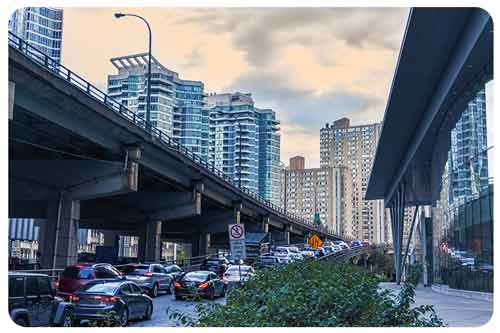
![cars driving in busy Ontario city]()
Ontario auto insurance rates continued to rise in 2026, driven by auto theft, inflation, and increased claims costs. Here are the key factors pushing premiums higher.
Inflation
Operating expenses rise each year due to inflation and other economic considerations. This increases the cost of liability claims, repairs, and other claims-related expenses. Rapidly rising inflation has led many Ontario insurers to request permission to increase rates from FSRAO.
Ontario is an auto theft hotbed
Auto theft continues to be a problem. According to a news release from the Solicitor General in Ontario, a car is stolen every 48 minutes in the province.
According to the Insurance Bureau of Canada, auto theft claims increased 254% from 2018 to 2023 nationally. The most significant increase is in Ontario, where auto theft claims increased by 524% and costs surpassed $1 billion. Nationally, there were 49,679 claims and $1.5 billion in claims costs in 2023. So, Ontario accounts for about two-thirds of auto theft. CTV News reports 25,000 thefts in 2024 and close to 30,000 in 2023.
The SUVs and luxury vehicles are the main targets, with the Lexus RX Series and Toyota Highlander being the most stolen by a wide margin, according to data from Équité Association. Other common targets include RAM 1500 and Honda CR-V.
Increased repair and claims costs
Like other consumer goods, cars are more expensive to buy in 2026 than they were a few years ago. More expensive cars are also more costly to repair.
Car features are more sophisticated, resulting in expensive parts and longer repair times. As manufacturers introduce more complicated technology (even for entry-level models), vehicle repair costs will increase. According to GISA, damage costs per claim have increased by 22.5% in the past five years and continue to increase at a rate of 7.4% per year.
Many insurers are also experiencing higher loss ratios. This means they are spending more money on paying out claims than they are generating from premiums. According to 2023 FACTS of the Property and Casualty Industry in Canada, 55% of premiums are used to pay out claims. Insurers need to increase premiums to ensure they are not operating at a loss.
More collisions
There are more vehicles on the roads, and the number of accident-related claims submitted each year is on the rise. According to the Ontario Road Safety Annual Report, there were 26,993 collisions in 2023, 616 of which were fatal and 36,090 people were injured.
After 20 years of a downward trend, the number of collisions has been on the rise again since 2020.
- 2023: 26,993
- 2022: 27,292
- 2021: 24,479
- 2020: 23,869
Source: Ontario road safety annual reports (ORSAR)
Fraud
Auto insurance fraud is a significant problem in the province. According to IBC, insurance fraud costs about $1.6 billion annually, up to $236 per insurance policy per year.
More drivers on the road
Customer behaviour is shifting back to pre-pandemic levels. As more vehicles travel our roads, we see a spike in the frequency of accidents, increasing auto claims. More people are commuting once again, and traffic volume has increased.
Ontarians spend more time on the road than other Canadians. The average commute time is 28.8 minutes, according to Census data. The longest commutes are found in larger cities.
ThinkInsure Tip: Add OPCF 43 to your policy if you are insuring a new vehicle
Did you know a new car can depreciate by 20-30% in the first year alone? If your car is totalled or stolen, standard insurance only pays the car's depreciated value. This amount may not be enough to pay off your loan.
OPCF 43 waives depreciation for the first few years. This ensures that you receive a payout reflecting the original or replacement value of your car.